BELONGING
I Lichen You
Jennica Mills
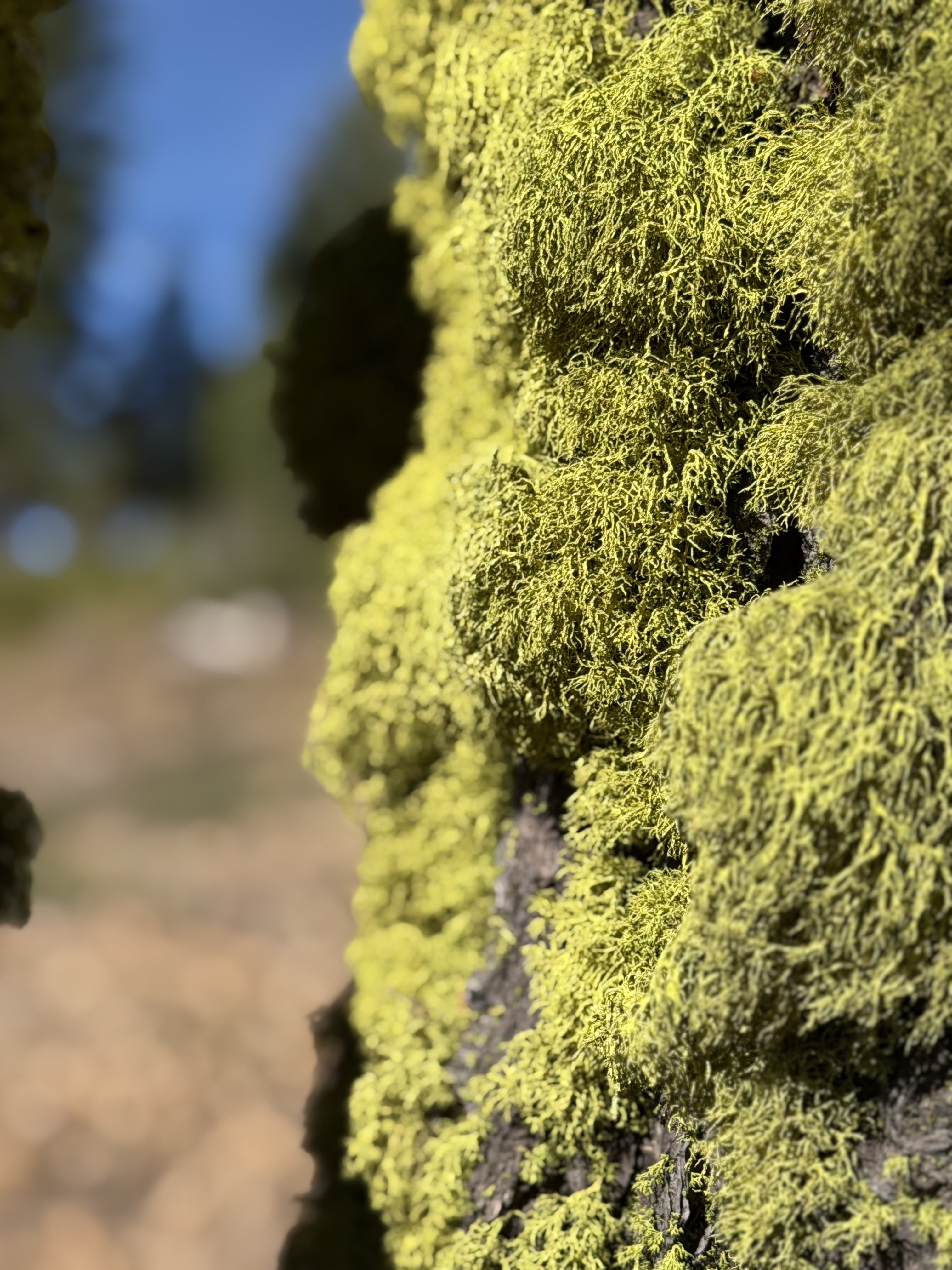
I was out hiking when I spotted what looked like moss growing on a tree in glorious, shaggy abundance.
“Can we get closer so I can touch it?” I asked.
“Of course.”
When we reached the tree, I squealed, “IT'S LICHEN! NOT MOSS!” (Wolf lichen, for those of you into nature porn.)
Naturally, I photographed it like I'd made a botanical discovery.
When I turned around, my hiking companion handed me a fallen piece.
“I lichen you.”
A deep laugh burst out of me.
It was a throwaway joke, but it was for me. Nature humor is apparently one of my love languages.
It got me thinking about what we expect from one another, whether we're in a relationship, friendship, situationship, or what-the-actual-fu$k-is-this-ship.
We notice what's missing and what someone SHOULD have done differently.
How often do we evaluate people and miss the small ways they meet us?
They remember a detail, make a joke just for us, or happily agree to take a detour because we need to touch a tree.
I'm not suggesting we ignore red flags, tolerate poor behavior, or build relationships out of breadcrumbs.
I get it. A piece of lichen is not a substitute for emotional availability.
But we can replay a three-minute conversation for three days, analyze someone's tone like we're working for the FBI, and build a case around a text message. Oh, is that just me?!
Meanwhile, delight gets four seconds before we return to our regularly scheduled programming.
I could have giggled and moved on. Instead, I felt the big laugh move through me, the warmth in my face, and the pleasure of meeting eyes. I let myself enjoy being known in this small, ridiculous way.
If you're already into somatic stuff, you may know this as resourcing: orienting toward what's working or supportive without pretending the difficult stuff isn't there.
It's simple in concept, though not always easy in practice. Our attention has habits, and our bodies have histories.
Deb Dana, a clinician and author known for her work with polyvagal theory, calls these little moments of safety, connection, and well-being glimmers. They're the small experiences that can easily pass us by unless we give ourselves a chance to notice them and to stay with them just a little longer than we normally might.
And when a glimmer like this shows up in the wild, it's a little freebie from life.
Even after decades of embodied practice, I keep discovering how much more aliveness I can let in.
A piece of lichen doesn't need to mean anything profound. I just don't want to miss the pleasure because it arrived disguised as a botanical pun.
I'm really lichen it.